Almost everyone eats for reasons other than hunger sometimes: a hard day, a long to-do list, a celebration, plain boredom. It’s human, and it isn’t a character flaw. But if it happens often and leaves you feeling stuck, it helps to learn what’s driving it. Here’s a practical, judgment-free way to tell the difference.
Physical hunger vs. emotional hunger
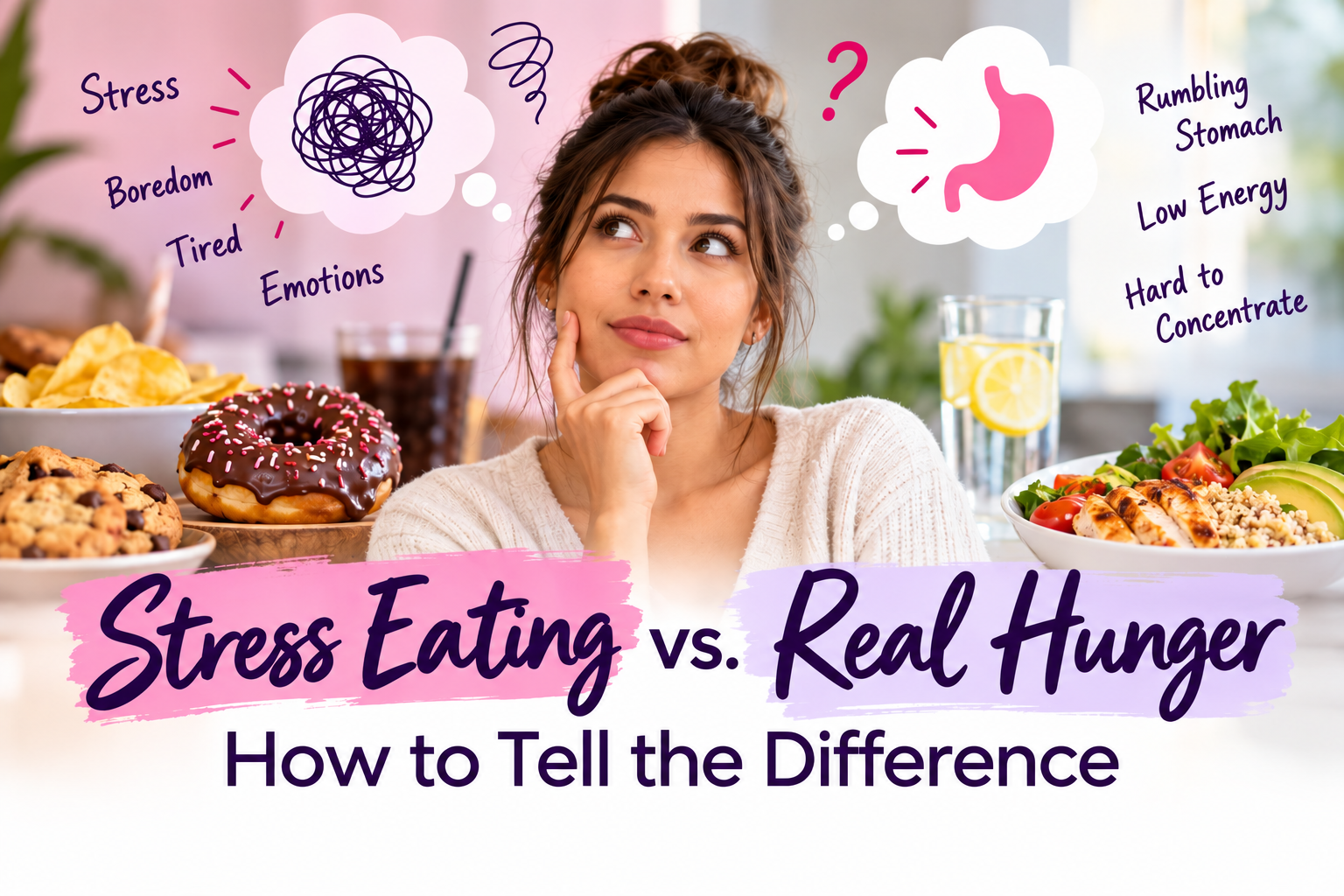
- Physical hunger tends to build gradually. It shows up in the body (a rumbling stomach, low energy, trouble concentrating) and is usually satisfied by many different foods.
- Emotional hunger often arrives suddenly and feels urgent. It may crave a specific comfort food, shows up alongside a feeling (stress, loneliness, boredom, tiredness), and doesn’t always switch off when you’re full.
Real life is rarely this tidy, and most people experience a mix of both. The goal isn’t perfection. It’s noticing.
Common triggers
- Stress and a packed schedule
- Poor sleep (research associates short sleep with stronger cravings)
- Boredom or downtime
- Skipping meals, then feeling ravenous later
- Social settings and strong food memories
- Strong feelings, including happy ones
A 5-step pause you can try
- Stop for a minute. Put the food down, or step away from the kitchen.
- Check your body. When did you last eat? Is your stomach actually empty?
- Name the feeling. Stressed, tired, lonely, bored? Even naming it can take some of the urgency out.
- Offer a small alternative. A glass of water, a short walk, a stretch, a text to a friend, a few slow breaths.
- Decide, without judgment. If you still want the food, have it and enjoy it. Noticing is the habit you’re building, not rules.
Habits that make it easier
- Eat regular meals with protein, which can help you feel satisfied
- Protect your sleep
- Keep a few satisfying options on hand so you’re not choosing in a rush
- Build in small stress breaks during the day
- Be kind to yourself after an off moment. Shame tends to make the cycle worse
When to reach out for more support
If eating feels out of control, you eat large amounts quickly and feel distressed afterward, or food and weight take up most of your thoughts, please talk with a healthcare provider or a licensed mental health professional. You deserve real support, and these patterns are common and treatable.
How we help
At Westchester Weight Loss Wellness in Harrison, NY and Stamford, CT, our nurse-led, medically supervised team works with you in a judgment-free environment. We look at the whole picture, including sleep, stress, nutrition, and routine, to build a plan around your life. If you’d like to talk through what’s going on, a consultation is a good place to start.
Please call us at (914) 685-6471 or book online rather than sharing personal health details in comments or messages. That helps us keep your information private and secure.
Book a Consultation · (914) 685-6471
Westchester Weight Loss Wellness · Harrison, NY & Stamford, CT
This article is for general education and isn’t a substitute for personalized medical advice. It is not a diagnosis or treatment for any eating or mental health condition. Treatment decisions should always be made with your healthcare provider. Individual results vary.
Comer por Estrés vs. Hambre Real: Cómo Notar la Diferencia
Casi todas comemos a veces por razones distintas al hambre: un día difícil, una lista interminable de pendientes, una celebración o simple aburrimiento. Es humano y no es un defecto de carácter. Pero si ocurre con frecuencia y la deja sintiéndose atrapada, ayuda entender qué lo impulsa. Aquí tiene una forma práctica y sin juicios de notar la diferencia.
Hambre física vs. hambre emocional
- El hambre física suele aumentar poco a poco. Se siente en el cuerpo (gruñidos del estómago, poca energía, dificultad para concentrarse) y normalmente se calma con muchos alimentos distintos.
- El hambre emocional a menudo llega de repente y se siente urgente. Puede pedir una comida reconfortante específica, aparece junto con una emoción (estrés, soledad, aburrimiento, cansancio) y no siempre se detiene cuando ya está satisfecha.
La vida real rara vez es tan ordenada, y la mayoría de las personas experimentan una mezcla de ambas. La meta no es la perfección, sino darse cuenta.
Desencadenantes comunes
- El estrés y una agenda muy llena
- Dormir mal (la investigación asocia el sueño corto con antojos más fuertes)
- El aburrimiento o el tiempo libre
- Saltarse comidas y luego sentir mucha hambre
- Los entornos sociales y los recuerdos ligados a la comida
- Las emociones intensas, incluidas las alegres
Una pausa de 5 pasos que puede probar
- Deténgase un minuto. Deje la comida o aléjese de la cocina.
- Revise su cuerpo. ¿Cuándo comió por última vez? ¿Su estómago realmente está vacío?
- Ponga nombre a lo que siente. ¿Estrés, cansancio, soledad, aburrimiento? Incluso nombrarlo puede quitarle algo de urgencia.
- Ofrezca una pequeña alternativa. Un vaso de agua, una caminata corta, un estiramiento, un mensaje a una amiga, unas respiraciones lentas.
- Decida, sin juzgarse. Si aún quiere la comida, disfrútela. Darse cuenta es el hábito que está construyendo, no reglas.
Hábitos que lo hacen más fácil
- Comer a horas regulares con proteína, que puede ayudarla a sentirse satisfecha
- Proteger su sueño
- Tener a mano algunas opciones satisfactorias para no elegir con prisa
- Incluir pequeñas pausas de estrés durante el día
- Ser amable consigo misma después de un momento difícil. La vergüenza tiende a empeorar el ciclo
Cuándo buscar más apoyo
Si siente que no puede controlar la alimentación, come grandes cantidades rápidamente y se siente angustiada después, o la comida y el peso ocupan la mayor parte de sus pensamientos, por favor hable con un proveedor de atención médica o con un profesional de salud mental con licencia. Usted merece un apoyo real, y estos patrones son comunes y tratables.
Cómo le ayudamos
En Westchester Weight Loss Wellness, en Harrison, NY y Stamford, CT, nuestro equipo dirigido por enfermería y con supervisión médica trabaja con usted en un ambiente libre de juicios. Miramos el panorama completo, incluyendo el sueño, el estrés, la nutrición y la rutina, para construir un plan en torno a su vida. Si desea conversar sobre lo que está pasando, una consulta es un buen punto de partida.
Le pedimos que nos llame al (914) 685-6471 o reserve en línea, en lugar de compartir detalles de salud personales en comentarios o mensajes. Esto nos ayuda a proteger su privacidad e información.
Reserve una Consulta · (914) 685-6471
Westchester Weight Loss Wellness · Harrison, NY y Stamford, CT
Este artículo es de carácter educativo general y no sustituye el consejo médico personalizado. No es un diagnóstico ni un tratamiento para ninguna condición alimentaria o de salud mental. Las decisiones de tratamiento siempre deben tomarse con su proveedor de salud. Los resultados individuales varían.